
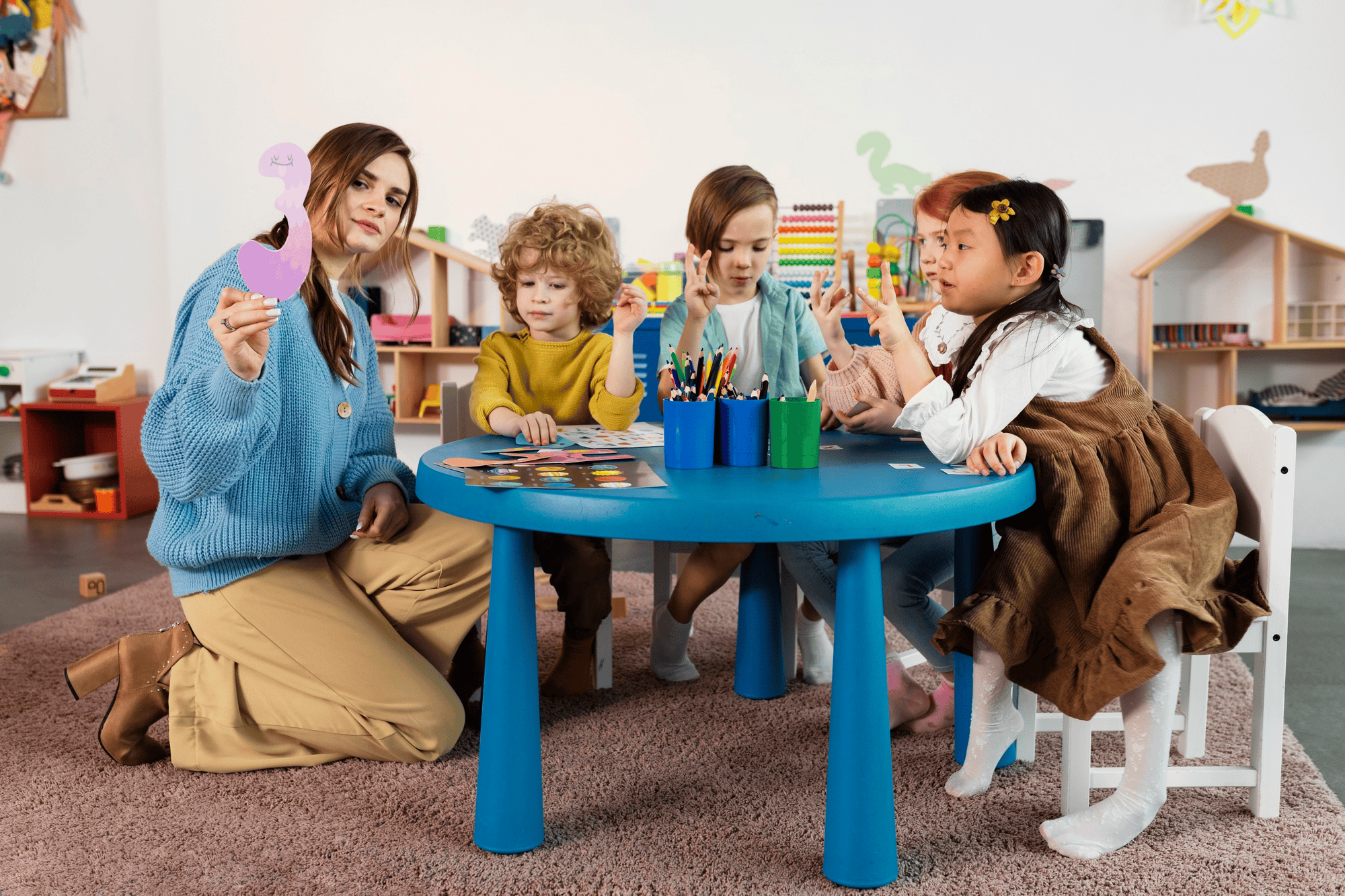
Children develop skills in many different ways. Some skills are learned through play, some through structured activities, and others through everyday experiences at home, school, and in the community. For children with autism, individualized support can help make these learning opportunities more meaningful and connected to their personal goals.
At The Center for Children with Special Needs, services are designed around each child's developmental needs, with a focus on communication, social engagement, play, adaptive behaviours, and participation in daily routines. CCSN's Farmington location provides clinician-led, evidence-based autism services in a structured setting with areas for individual and group treatment.
Understanding how an autism center can support skill development helps families see how therapy can extend beyond individual sessions. The goal is to create opportunities for children to practice useful skills and gradually apply them across different people, places, and situations.
How an Autism Center in Farmington Supports Skill Development
An autism center can provide a structured environment where children have opportunities to work on skills that are meaningful to their daily lives. At CCSN, individualized treatment planning considers each child's strengths, developmental needs, and areas where additional support may be helpful.
This approach allows skill development to be connected to practical situations rather than viewed as a single set of exercises.
Building Skills Through Individualized Learning
Children do not all learn at the same pace or respond to the same teaching approach. Individualized programming allows clinicians to adjust activities, teaching methods, and goals based on the child's needs.
At CCSN, ABA programming may address areas such as:
- Communication
- Social engagement
- Play skills
- Attention
- Adaptive behaviours
- Emotional regulation
- Daily living activities
- Safety awareness
- Executive functioning
https://www.ccsnct.org/wp-admin/admin-post.php?action=purge_cache&type=post-9876&_wpnonce=59feba5e88
The specific goals can vary from one child to another. This flexibility helps ensure that skill development remains relevant to the child's current stage and longer-term needs.
Connecting Learning With Everyday Activities
Children often benefit when they can practice skills in situations that resemble the environments they experience outside of therapy. Learning how to request something, wait for a turn, follow a routine, or participate in a group activity can become more meaningful when those skills connect to everyday life.
CCSN's programs incorporate structured learning as well as naturalistic opportunities, helping children practice skills across different contexts. The Early Learning Center, for example, uses play and familiar experiences to support communication, social interaction, and adaptive behaviours.
Developing Social Interaction Through Meaningful Practice
Social interaction involves many skills that can take time to develop. Children may need opportunities to practice communication, joint attention, turn-taking, flexibility, and participation with peers.
A supportive environment can provide repeated opportunities to learn these skills while allowing clinicians to adjust activities according to each child's needs.
Encouraging Communication and Shared Activities
Communication can take many forms. Children may communicate through spoken language, gestures, pictures, assistive communication methods, or other approaches that work for them.
Social activities can create opportunities to practice communication in meaningful ways. For example, a child might learn to request a preferred activity, respond to a peer, participate in a shared game, or indicate that they need a break.
CCSN's Early Learning Center includes support for functional communication and social interaction, including activities that encourage joint attention, turn-taking, and social engagement.
Learning to Participate With Peers
Playing alongside or with other children can provide valuable opportunities to practice social skills. Group activities can introduce situations such as waiting, sharing materials, following group instructions, and responding to another child's actions.
These experiences can be gradually adjusted based on the child's comfort and developmental level. The objective is not for every child to interact in exactly the same way, but to support meaningful participation.
Small-group activities can also help children practice skills that may later be useful in preschool, kindergarten, after-school programs, or community settings.
Life Skills Therapy and Everyday Independence
Life skills are an important part of growing independence. They can include routines that children encounter at home, school, and in community settings.
An autism center in Farmington may incorporate these skills into individualized programming, giving children opportunities to practice practical tasks in a structured and supportive environment.
Supporting Daily Living Skills
Daily living skills can vary considerably depending on a child's age and developmental stage. Examples may include:
- Following a morning or classroom routine
- Cleaning up after an activity
- Managing personal belongings
- Using the bathroom
- Following simple safety instructions
- Participating in meal routines
- Completing steps in a familiar task
CCSN's ABA programs include activities of daily living, with programming adapted for different age groups. The Early Learning Center includes developmentally guided support for daily living activities, while programs for older children and adolescents can address independence and community skills.
Practicing Skills Step by Step
A new skill can feel easier when it is divided into smaller steps. A clinician may first demonstrate a task, provide support as needed, and gradually encourage the child to complete more of the process independently.
This type of practice can help children understand what comes next in a routine.
Over time, the same skill may be practiced in different situations. This can support generalization, which means using a learned skill with different people, materials, or environments rather than only in the original teaching setting.
Supporting School Readiness
School readiness involves more than academic knowledge. Children may also need opportunities to develop communication, attention, participation, flexibility, and classroom routines.
A structured autism program can support these areas while helping families and professionals think about the transition into a school environment.
Preparing for Classroom Routines
Children entering preschool or kindergarten may encounter many new routines. These can include sitting with a group, following directions, transitioning between activities, communicating with teachers, and participating in classroom tasks.
Skill-building activities can introduce similar expectations in an age-appropriate and supportive way.
CCSN's Early Learning Center specifically emphasizes school readiness and skill generalization, including transitions into preschool and kindergarten programs.
Supporting Transitions Between Activities
Moving from one activity to another can require flexibility and understanding of what comes next. Children can practice transitions through visual supports, predictable routines, verbal cues, or other strategies appropriate to their individual needs.
For example, a child may practice finishing a preferred activity before moving to a group activity. With repeated practice, transitions can become more familiar.
The approach can be adjusted according to the child's communication style, developmental level, and individual learning needs.
How Community-Based Skills Extend Learning
Skills learned during therapy become more useful when children can apply them beyond the treatment setting. Community participation can provide opportunities to practice communication, safety, independence, and social interaction in real-world situations.
CCSN's ABA programming includes community skills and safety awareness, particularly within programming designed to support greater independence for older children and adolescents.
Practicing Skills Across Different Environments
A child may learn a skill in one setting but need additional practice before using it somewhere else. For example, following a safety instruction in a clinic may be different from following the same instruction in a parking lot or community environment.
This is why skill generalization can be an important part of intervention.
Families and clinicians can work together to identify everyday situations where children can practice skills naturally.
Building Confidence Through Familiar Experiences
Community activities can become more predictable when children know what to expect. Preparing for an outing, practicing a routine, and gradually introducing new environments can help create meaningful learning opportunities.
Community participation might involve activities such as:
| Skill Area | Example Opportunity |
|---|---|
| Communication | Requesting help or expressing a preference |
| Safety | Practicing awareness near entrances or parking areas |
| Social interaction | Greeting someone or participating in a shared activity |
| Independence | Carrying personal belongings |
| Flexibility | Adjusting to a change in routine |
| Daily living | Practicing appropriate behaviour in a community setting |
These opportunities can be adapted to each child's abilities and goals rather than following a single approach for every family.
The Role of Families in Skill Development
Families play an important role in helping children use newly learned skills outside of structured sessions. Consistency can be especially helpful when children are practising routines or learning how to respond to familiar situations.
CCSN's ABA programs emphasize family involvement, including parent training and support designed to help families generalize skills into home and community environments.
Creating Consistency at Home
Families can support learning by using familiar language, routines, and expectations. This does not mean that every part of the day needs to become a therapy activity.
Instead, ordinary routines can provide natural opportunities for practice.
For example, families might encourage a child to:
- Put away belongings after arriving home
- Request a preferred snack
- Follow a short bedtime routine
- Choose between two activities
- Practice a familiar safety instruction
- Participate in simple household tasks
Small opportunities can become meaningful practice when they are connected to the child's goals.
Collaborating With Professionals
Communication between families and providers can help everyone understand what strategies are working and where additional support may be useful.
A collaborative approach can also help connect therapy goals with experiences at home, school, and in the community.
At CCSN, treatment planning involves families and is designed around each child's needs. The organisation also coordinates with related service providers and community programs as part of its multidisciplinary approach.
What Families Can Consider When Choosing an Autism Center
Choosing a provider is an important decision. Families can look beyond the type of service offered and consider how the program approaches individualized care, collaboration, and skill development.
The Farmington location of CCSN offers dedicated areas for individual and group treatment, as well as an indoor motor space. The location provides center-based and early intervention ABA services under clinician supervision.
Questions to Ask About a Program
Before selecting a program, families may want to ask:
- How are treatment goals determined?
- How are families involved in planning and progress discussions?
- What skills does the program address?
- How are skills practiced across different settings?
- How does the team coordinate with other providers?
- What support is available during school transitions?
- How does the program address communication and social participation?
These questions can help families better understand whether a program's approach aligns with their child's needs and family priorities.
Looking at the Whole Child
A child's development includes many interconnected areas. Communication can affect social participation. Daily living skills can influence independence. School readiness can involve both academic and adaptive abilities.
A comprehensive approach considers these connections rather than viewing each skill in isolation.
CCSN describes its model as multidisciplinary and clinician-led, with services that include ABA, occupational therapy, speech-language services, academic skills, educational evaluations, and school consultations.
Conclusion
An autism center in Farmington can provide children with structured opportunities to develop communication, social interaction, daily living, school readiness, and community participation skills. With individualized goals and consistent support, children can practice skills in ways that connect learning with their everyday experiences.
At The Center for Children with Special Needs, programming is designed around each child's developmental needs, with evidence-based services and collaboration among clinicians, families, and related providers. CCSN's Farmington location provides a structured setting for individual and group treatment while supporting skill development across different areas of daily life.
The most meaningful progress is not necessarily about completing a specific task in one setting. It can also involve helping a child use a skill with different people, in different environments, and during everyday routines. This broader approach can help connect therapy with home, school, and community experiences.
Contact Us
Families who want to learn more about available services, treatment approaches, or the Farmington location can Contact Us to speak with the CCSN team. Understanding the available options can help families make informed decisions based on their child's individual needs.
Frequently Asked Questions
Children may build communication, social, play, daily living, emotional regulation, attention, safety, and adaptive skills based on their individual needs.
Children can practice routines, managing belongings, completing tasks, and other daily activities through structured, gradual support.
School readiness may include communication, attention, group participation, transitions, social interaction, and adaptive skills alongside academic preparation.
Children can practice communication, turn-taking, joint attention, play, and peer participation through structured and developmentally appropriate activities.
Yes. Children can practice applying new skills across different settings, including home, school, and community environments, with support from families and providers.